
If You’re on GLP-1s, We Need to Talk About What Happens When You Stop

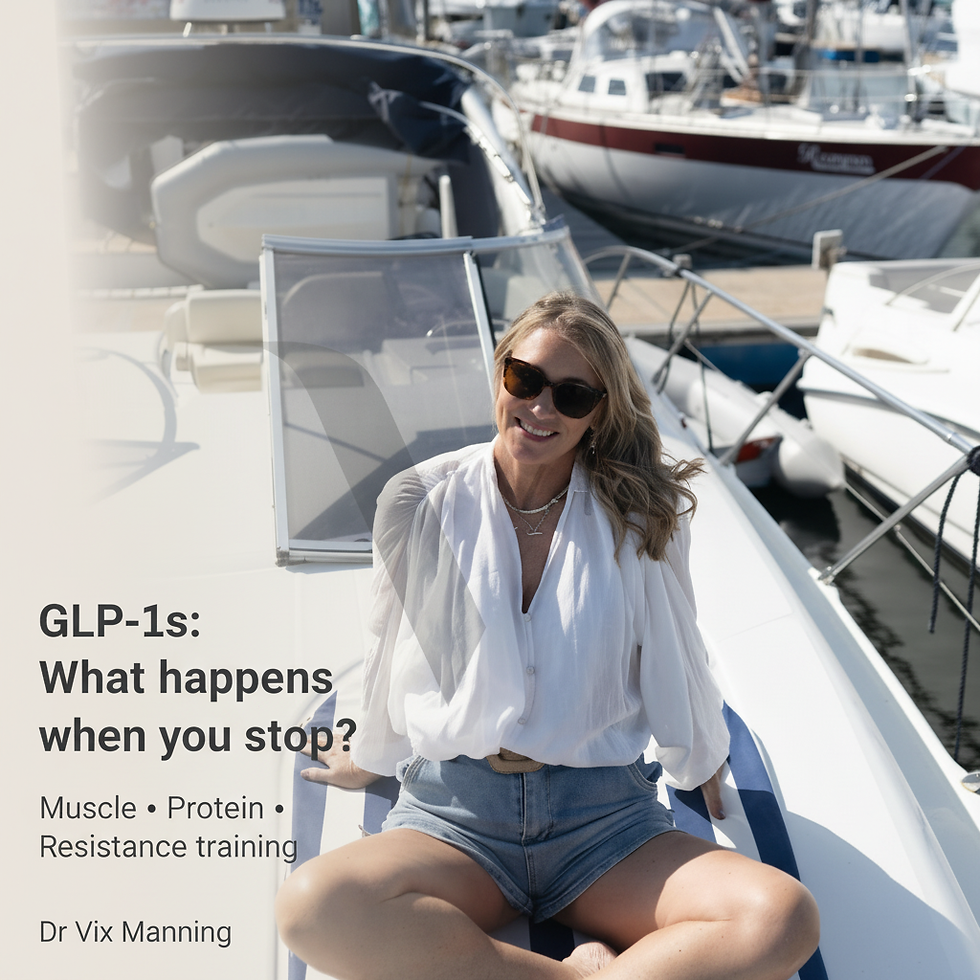
A new “Lancet” study has confirmed what many of us are now seeing in real life: most people who stop GLP-1 medication regain weight — and not just a bit. On average, around 5.6kg within months of stopping.
For transparency: I’ve just stopped my own Mounjaro due to nocturnal hypoglycaemia; found when I had my glucose monitor on in December with MAP Health. So I’m writing this not only as a doctor, but as someone navigating this exact transition right now.
The reality check
This meta-analysis (nearly 4,000 patients) found that stopping GLP-1 therapy wasn’t just associated with weight regain — it also showed:
- Blood pressure drifting back up
- Blood sugar control deteriorating
- Waist measurements increasing
- And the longer people were off the medication, the more pronounced the rebound
Real-world data suggests over half of patients discontinue within the first year— due to side effects, cost, shortages, or reaching a goal weight and deciding to stop.
And then the weight often returns. Some studies suggest up to two-thirds of lost weight comes back within six months.
This isn’t about willpower. It isn’t failure. It’s biology — and it’s why you need a plan.
Why this matters more than ever
I’ve been monitoring my own metabolic data with a CGM throughout my Mounjaro journey. The glucose stability was impressive — until it wasn’t.
Nocturnal hypoglycaemia is uncommon in non-diabetics (around 1–3%), but if it happens, it’s a stop signal. No debate. I dipping to below 3 around 3 am.
But stopping doesn’t mean accepting metabolic rebound as inevitable.
In my book Busting the Code to Ageing, I wrote about GLP-1s with this exact question in mind: what happens when you can’t continue — or when you reach your goal and need to maintain?
The conversation we should be having from day one
Whether you’re stopping by choice, necessity, or medical recommendation (as I am), these are the three non-negotiables that determine whether you maintain your results.
1) Protect your muscle mass — it’s your metabolic foundation
With GLP-1 weight loss, you lose fat and muscle. The issue? Muscle is your metabolic insurance policy.
Less muscle = lower calorie requirements = easier regain.
Aim for 1.6–2.2g protein per kg of ideal body weight, daily
So if your weight is 70kg, that’s 112–154g/day** — roughly 30–40g per main meal.
What I’m doing: I have my **Zinzino LeanShake daily with a prebiotic. It’s high-protein, low sugar, includes five dietary fibres, and it’s genuinely doable as a daily habit. At 231 calories per serving, it helps me hit protein targets without turning breakfast into a full meal and I can have on my drive to clinic in the morning..
2) Resistance training is non-negotiable
Once you start GLP-1s, strength training becomes even more important: you’re building the metabolic machinery you’ll rely on long-term.
Minimum: 2–3 sessions per week
Focus: progressive overload + compound movements
Muscle is a major “glucose disposal” tissue — the more functional lean mass you have, the better your metabolic flexibility.
3) Address the root causes while you have the window
GLP-1s don’t “fix” metabolic dysfunction — they give you a window to fix it.
That means testing and addressing:
- Inflammation: many people test with omega ratios around 15:1, versus an optimal 3:1
- Gut health: ~70% of the immune system lives here; if this isn’t optimised, long-term weight management is harder than it needs to be
- Glucose patterns & insulin sensitivity: CGM data can still be valuable after stopping — it shows what’s happening metabolically, not just on the scales
- Nutritional deficiencies that perpetuate dysfunction
This is why I am going to start to run comprehensive testing before, during, and especially when transitioning off therapy. We need to see what’s happening at a cellular level.
What I’m doing right now (post-Mounjaro) and yes its been Christmas….. to be honest I haven’t had one sugary cocktail at all- ive stuck to clean drinks and red wine..
I’m doubling down on:
- Protein optimisation at every meal (LeanShake in the morning + whole food protein at lunch/dinner)
- Progressive resistance training 4x weekly**
- Continuing CGM monitoring to track glucose stability
- Daily Balance Oil for omega-3 optimisation and inflammation control
-Night time Vivorum for improved sleep and cellular rejuvenation
- Food sequencing to improve post-meal glucose response
- Daily dog walks for stress management and grounding (although my three dogs are currently behaving like herding cats — so “zen” is a work in progress)
I’ll keep sharing the results — the wins and the challenges — because this requires honest conversations about what actually works.
The question that changes everything
It’s not: “Will I regain weight when I stop?”
It’s: “What metabolic foundation am I building while I’m on this medication — and after I stop?”
Are you:
- Building sustainable eating patterns?
- Protecting and building muscle?
- Addressing root causes of dysfunction?
- Creating systems that still work when pharmaceutical support isn’t there?
What the Lancet paper really confirms
The authors were clear: guidelines need to address not just starting GLP-1s, but discontinuation strategies and long-term maintenance.
Translation: we need structured protocols — not hope and willpower.
Because ageing is inevitable. Metabolic decline is optional.
If you’re on a GLP-1: start implementing these strategies today.
If you’ve stopped (or need to stop): this isn’t the end — it’s phase two.
If you’re considering starting ask your practitioner, “What’s your protocol for maintaining results if I need to stop?”
Weight loss isn’t the goal. Metabolic transformation is.
#LongevityMedicine #GLP1 #MetabolicHealth #WeightLoss #MuscleMass #PatientEducation #GutHealth #AntiInflammatory #EvidenceBasedMedicine


Comments