
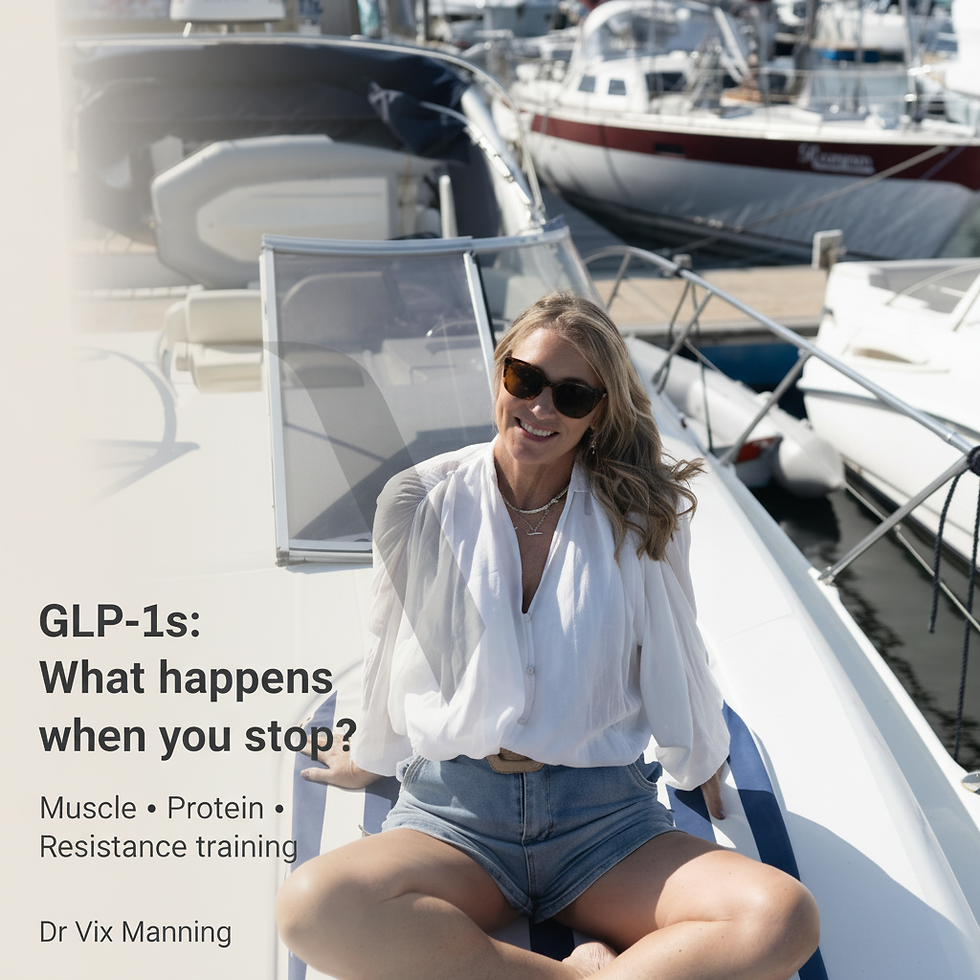
GLP-1 Weight Loss: Why Mind and Metabolism Have to Work Together

By Dr Victoria Manning, aesthetic and longevity doctor | Bournemouth, Lymington and Harley Street | In conversation with Nicole McKee
Key takeaways
GLP-1 medications reduce appetite by copying natural gut hormones. The "quiet" people describe is biology, not willpower.
A significant share of weight lost can be muscle unless you prioritise protein and strength training.
Clinical trials show much of the weight returns within a year of stopping if nothing else has changed.
Food noise is driven partly by inflammation and blood sugar swings, not personal failure.
Long-term success depends on planning your exit, protecting muscle, following an 80/20 approach and monitoring blood markers.
I recently went live with Nicole McKee, a psychologist, hypnotherapist and GLP-1 health coach who has lost 65lbs and kept it off for two years. I've lost 42lbs myself and remain on a low maintenance dose, which is the part almost nobody talks about. Together we explored why lasting results need both the mind and the metabolism.
How do GLP-1 medications work?
GLP-1 and GIP are hormones your gut naturally releases when you eat. GLP-1 medications mimic them. GLP-1 does three main things:
Slows stomach emptying, so you feel full for longer
Improves blood sugar control
Acts on the brain's appetite centres, reducing hunger and cravings
GIP works alongside it, supporting blood sugar and how the body processes fat. This is why people describe a sudden "quiet" around food. It is biology, not newly discovered willpower.
Do GLP-1 medications reduce inflammation?
Emerging evidence suggests they do. Visceral fat, the fat around your organs, is not a passive store. It is an active organ that releases inflammatory signals. As it shrinks, inflammation often falls with it. Steadier blood sugar reduces wear and tear on the body, and these hormones appear to calm the immune system directly, sometimes before significant weight has been lost. This may help explain the cardiovascular benefits seen in research.
Nicole describes this as a psychological window. When the medication turns the volume down, many people have headspace they have never had before. The medication buys time. What you do with that time decides the outcome.
What happens to your face and skin after rapid weight loss?
Rapid weight loss reduces volume in both the deep and superficial fat pads of the face, and skin laxity can follow. The term "Ozempic face" is used widely online, but it is simply what rapid weight loss does to anyone.
Skin does not bounce back on a schedule. Collagen production depends on protein intake, micronutrients, sun protection and age. Many people also feel unexpectedly lost when the weight comes off. Nicole sees body image lagging behind physical change, difficulty recognising yourself, and challenges with other people's reactions.
Can you lose muscle on GLP-1 medications?
Yes. A significant proportion of the weight lost can be muscle if protein intake is low and there is no strength training. Muscle matters for metabolism, skin quality, blood sugar control and healthy ageing.
My approach is foundations before decorations: protein, strength and skin health first, then aesthetic support if needed.
Why does weight come back after stopping GLP-1 medication?
The major trials are clear. In the STEP 1 extension study, people who stopped semaglutide regained around two thirds of their lost weight within a year. In SURMOUNT-4, people who stopped tirzepatide regained a substantial amount, while those who continued kept losing weight.
This is not failure. The body defends its previous set point:
Leptin, the fullness hormone, falls
Hunger signals rise
Metabolic rate can drop further than expected
Lost muscle leaves less metabolic buffer
From a psychological perspective, Nicole sees common relapse triggers including all-or-nothing thinking, returning emotional eating, loss of routine and shame after a setback.
How to protect your results
Plan your exit before you start, and come off under medical supervision rather than stopping abruptly
Protect your muscle with protein and resistance training
Build habits while the medication is still helping, not afterwards
What is food noise?
Food noise describes intrusive, constant thoughts about food: planning, bargaining and battling cravings. Many people have lived with it for years without a name for it.
There is a physical explanation. The gut and brain communicate constantly through the vagus nerve, gut hormones and the microbiome. Chronic low-grade inflammation disrupts leptin and insulin signalling, so the brain does not properly register fullness. Inflammation drives appetite, and appetite drives inflammation. Add blood sugar swings and ultra-processed food and you have built a craving machine.
The answer is to work from both ends: calm inflammation and steady glucose, while addressing habits and mindset.
What is the 80/20 rule for keeping weight off?
Aim to get the foundational pillars right around 80% of the time:
Protein at every meal
Resistance training at least twice a week
Quality sleep
Stress management
Daily movement
Stable blood sugar
Allow the remaining 20% for real life, without guilt. Perfectionism fuels the all-or-nothing cycle. Consistency keeps the weight off.
What tests should you have for weight maintenance?
Maintenance should be monitored, not assumed. Useful markers include:
HbA1c and fasting insulin
hsCRP (inflammation)
Lipid profile
Vitamin D, ferritin and B12
Body composition, not just weight
A continuous glucose monitor worn for a couple of weeks shows which meals, poor nights' sleep and stressful days affect your glucose, turning guesswork into data.
Optimal, not normal. In range does not mean thriving.
The medication is a tool, not the plan.
Protect your muscle and you protect your metabolism.
Food noise is biology, so stop blaming yourself.
Plan the exit before you start.
Test, not guess.
Frequently asked questions
Is GLP-1 weight loss permanent?
Not automatically. Trial data show significant regain when medication stops without lifestyle changes. Protecting muscle, building habits and a supervised exit plan improve long-term results.
How much protein do I need on a GLP-1 medication?
Protein needs vary by body size, age and activity. Aim to include protein at every meal and discuss a personalised target with your clinician.
Why do I feel low after losing weight?
Body image often lags behind physical change. Feeling unfamiliar in your body is common and worth addressing with psychological support.
Can facial volume loss after weight loss be treated?
Yes, but foundations come first. Protein, strength training, skin health and sun protection support collagen before any aesthetic treatment is considered.
Should I stop GLP-1 medication suddenly?
Coming off should be planned with your prescriber, ideally with a gradual reduction and supporting habits in place.
About the author: Dr Victoria Manning (Dr Vix) is a GP with 30 years' medical experience and over two decades in aesthetic medicine. She is a global trainer for Sinclair Pharma and author of Busting the Code to Ageing: How to Win the Inflammation Game. She practises in Bournemouth, Lymington and Harley Street, London.
This article is for educational purposes and is not individual medical advice. Please speak to a qualified prescriber about your own circumstances.
Comments